Key takeaways
- The first home owner grant only applies to new homes: $10,000 in Victoria and NSW, $30,000 in Queensland. But the grant covers the cost of buying, not the quality of the build.
- Defects in new Australian builds are common. AHURI research found roughly 70% of homes have building quality problems, and new doesn’t mean exempt.
- Council sign-off and your builder’s own checks confirm minimum regulatory compliance. They don’t assess workmanship quality, finishes, or whether the build matches your contract specification.
- A new home building inspection at practical completion is your last chance to document defects before you accept the property and the builder’s obligation to fix issues shifts to strict notification deadlines.
- For first-home buyers using the FHOG, an inspection costs a fraction of the build and protects the equity you and the government are putting into the property.
Building your first home is a massive achievement and an exciting experience that you’ll never forget. The cost side of things can be difficult to understand, but one thing to know for sure is that you’ve qualified for a grant that can be worth up to $30,000 under the First Home Buyer’s scheme. That’s real money toward most likely the biggest purchase of your life, and for a lot of first-time buyers, that changes what’s possible.
Here’s the part nobody tells you about during the grant process: the first home owner grant only applies to new homes, and they can still have defects. Council sign-off and your builder’s own checks don’t cover the same ground as an independent building inspection, and by the time you’ve signed at handover, the burden of proving a problem shifts to you. An independent building inspection is the step that protects the equity you and the government are putting into the build.
Before receiving the keys to your new property, it’s worth knowing what the First Home Owner Grant includes in 2026, and why a new home building inspection still matters.
First Home Owner Grant 2026

The first home owner grant is a one-off, tax-free cash payment funded by state and territory governments. It’s designed to help eligible first-home buyers purchase or build a new home, and every state in Australia runs its own version.
Across every state, the grant is exclusively restricted to new homes. That includes newly constructed houses, townhouses, units, off-the-plan builds, and homes that have undergone substantial renovations before sale. If you’re buying an established home, you won’t qualify for the grant itself, though you may still be eligible for stamp duty concessions depending on your state.
Grant amounts by state
Because each state sets its own scheme, the amounts and price caps vary.
| State | Grant amount and property price cap |
| Queensland | $30,000 for new homes valued under $750,000. |
| Victoria | $10,000 for new homes valued at $750,000 or less, including land. |
| New South Wales | $10,000 capped at $600,000 for a new home purchase or $750,000 for a house-and-land build. |
Eligibility and residency rules
The details differ by state, but the core requirements are consistent across Australia.
You must be a natural person (not a company or trust) aged 18 or older. At least one applicant must be an Australian citizen or permanent resident. Neither you nor your spouse or de facto partner can have previously owned residential property in Australia or received a first home grant before.
Once you’ve settled, you need to move in within 12 months and live there continuously for the required minimum period. In Victoria and New South Wales, that’s 12 months. In Queensland, it’s six months. If you fail to satisfy the residency condition, you repay the full grant, potentially with penalties on top.
One thing worth knowing: state grants can be stacked with federal programmes. The First Home Guarantee lets eligible buyers purchase with a 5% deposit and no lenders mortgage insurance, and since October 2025, there’s no income cap and no cap on the number of places. The federal Help to Buy shared equity scheme, which launched in December 2025, is separate again. Your mortgage broker or conveyancer can walk you through which ones apply to your situation.
The grant helps you afford the home. What it doesn’t do is check that the home you’re buying is built properly. That’s a different step, and it’s one that too many first-home buyers skip.
Why a building inspection still matters on a new home
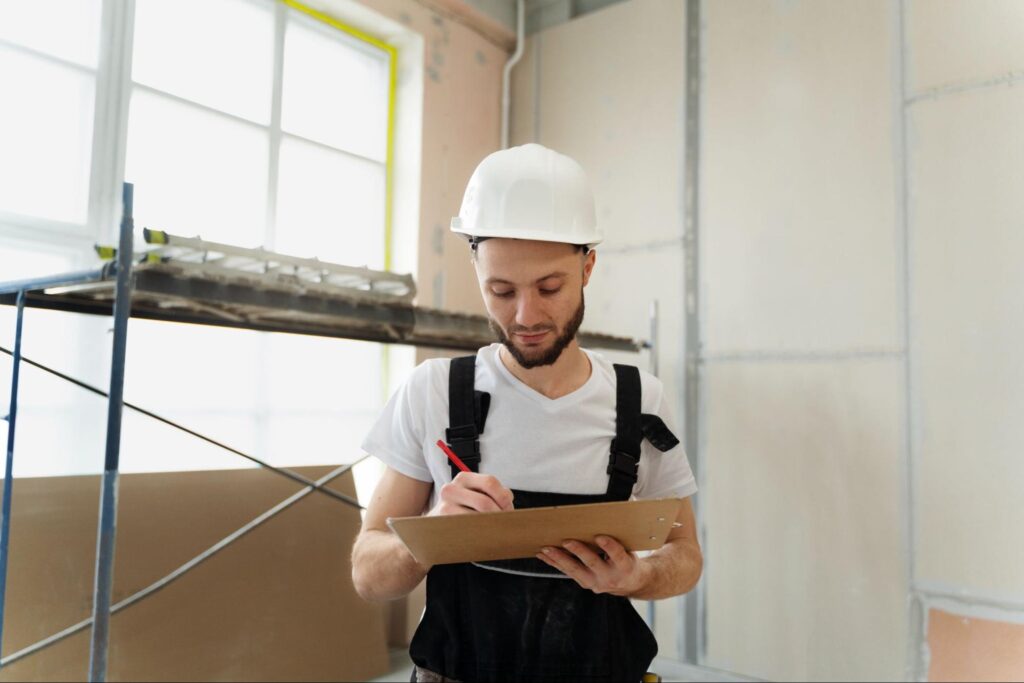
Most first-home buyers assume that because their home is new, passed council, and the builder signed off, it must be sound. That assumption is wrong, and there’s data behind it.
Around 70% of Australian homes report having at least one building defect, with the main occurrences being cracked walls (44%), mould (35%), and plumbing (27%). Defects are systematic; they’re not something rare that only happens to a few homeowners.
Victoria’s state government responded in June 2025 by passing the Building Legislation Amendment (Buyer Protections) Bill into law. This is regulatory confirmation that new builds aren’t automatically reliable.
This isn’t a reason to abandon a build, but it is a reason to verify it independently with a home inspector before you accept it to protect the equity of your home.
Receiving a government grant or buying a brand-new property does not guarantee the building is free of defects, structural failure, or contractual issues. Westpac’s own first-home-buyer guide recommends a final inspection before settlement as a quality check and for your peace of mind, and that’s a bank giving the same advice an independent inspector would.
Should you get a building inspection on a new home?
Yes. And there are three objections worth addressing upfront.
‘My builder already inspects at each stage.’ A builder’s quality checks assess work against the builder’s own standards and timeline. An independent inspector works for you, not the builder. They check compliance against the National Construction Code and the relevant Australian Standards, and they report to you.
‘Council signed it off.’ Council inspections are regulatory compliance checks at specific milestones. They confirm that work meets the minimum requirements for a building permit to progress. They don’t assess workmanship quality, material choices, or defects that sit outside their defined scope. A practical completion inspection goes further and looks at any potential issues.
‘It’s brand new, what could be wrong?’ New doesn’t mean defect-free; it usually just means the defects haven’t been found yet. Inspections ensure these defects are controlled before they can cause any long term damage to your home.
What new home building inspections cover
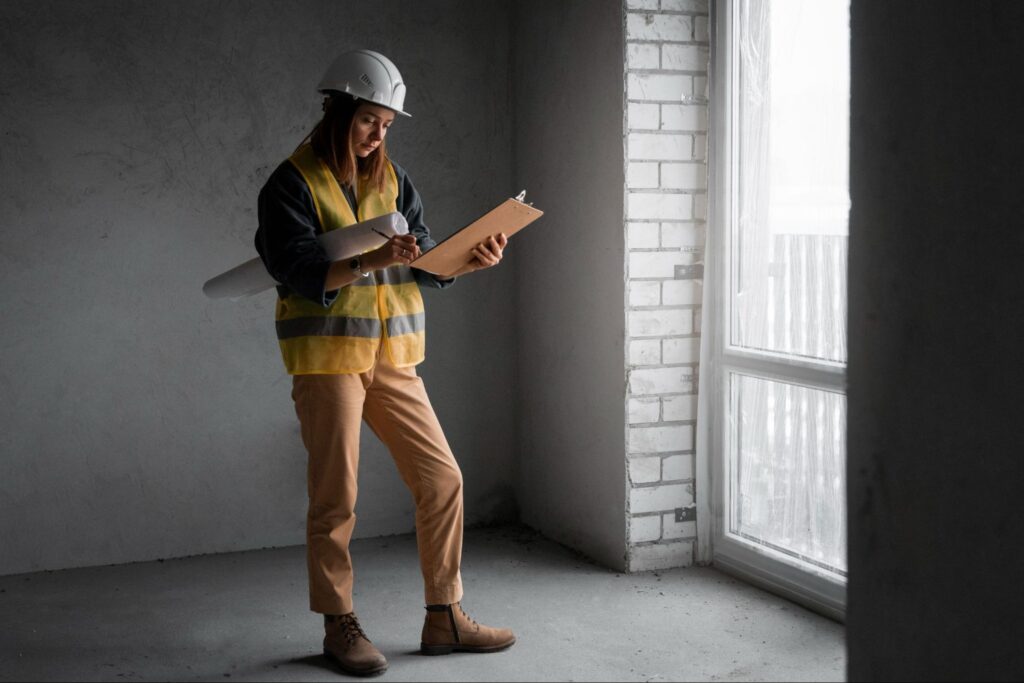
A new home building inspection isn’t a single event. Inspections happen at key construction stages of the build, with each one checking work that will be hidden or inaccessible once the next stage covers it.
Construction stage inspections
Staged inspections follow the build timeline. The typical stages are pre-slab (before the concrete is poured and reinforcement is covered), frame (before the structural frame is lined or clad), lock-up (external cladding, doors and windows in place), and fixing (internal fit-out before final finishes go on).
Each stage inspection checks work that you cannot see once the next stage covers it. A framing defect caught at frame stage costs a fraction of what it costs to fix after the plaster, insulation and paint are on. A waterproofing failure identified before tiling is straightforward to remediate. The same failure discovered 18 months after handover, through a damp patch on a ceiling, is a different conversation.
Construction stage inspections are booked to align with each build milestone, and each produces a written report documenting what was found and checks whether the work meets the relevant building code requirements.
Practical completion and handover inspections
The practical completion inspection (PCI) happens when the builder says the home is finished and ready for handover. This is your last documented opportunity to identify defects before you sign off and the builder’s responsibility formally shifts.
A PCI typically covers structural integrity, waterproofing in wet areas and external membranes, fixtures and fittings, electrical and plumbing, insulation, cladding, internal and external finishes, and whether the completed home matches the approved plans and specifications.
A handover inspection is closely related. This is when the building work is done, and the property owner is handed the keys to start moving in. Some inspectors use the terms interchangeably, while others distinguish the PCI from the handover. Either way, the principle is the same: get an independent report before you sign.
What happens if you skip it
If you skip an independent inspection, a lot of the responsibility for things that go wrong falls on your shoulders.
First, defects found after handover are your problem to prove. Once you’ve accepted the property, the burden of evidence shifts. You’ll need a formal inspection report, a building expert’s opinion, and potentially a claim through Domestic Building Dispute Resolution Victoria, the QBCC’s defect complaint process in Queensland, or Building Commission NSW, all of which take time, cost money, and start from a weaker position than if the same defect had been documented before you signed.
Second, defect liability periods have hard end dates. In New South Wales, statutory warranties cover major defects for six years and all other defects for two years from the date of completion. In Queensland, the Home Warranty Scheme covers structural defects for six years and six months from the date of contract, and non-structural defects for a period from practical completion. If a defect is identified and formally reported within that window, the builder has a legal obligation to rectify it. Miss the window, and you’re paying for repairs yourself. A building inspection report dated before handover gives you the documentation you need within the right timeframe.
Third is the cost difference. Waterproofing, framing, and non-compliant work are the most commonly missed categories, and they’re also the most expensive to remediate after the fact. What costs hundreds to catch and fix during construction can cost tens of thousands once the home is finished, occupied, and the defect has had time to cause secondary damage.
Protect your first home build with a quality inspection

A new home building inspection costs a fraction of what uncaught defects cost to fix after handover. It also protects something harder to recover: the statutory warranty rights and the rental or resale value you lose when problems go undocumented.
Landmark Inspections works with first-home builders across Victoria, New South Wales and Queensland. Our registered tradespeople inspect your build at each construction stage and at practical completion, deliver your report within 24 hours, and liaise directly with your builder to resolve defects before you sign off. Explore our construction stage inspections to see what’s included at each milestone.
Contact us today to schedule your independent inspection for your first home build.