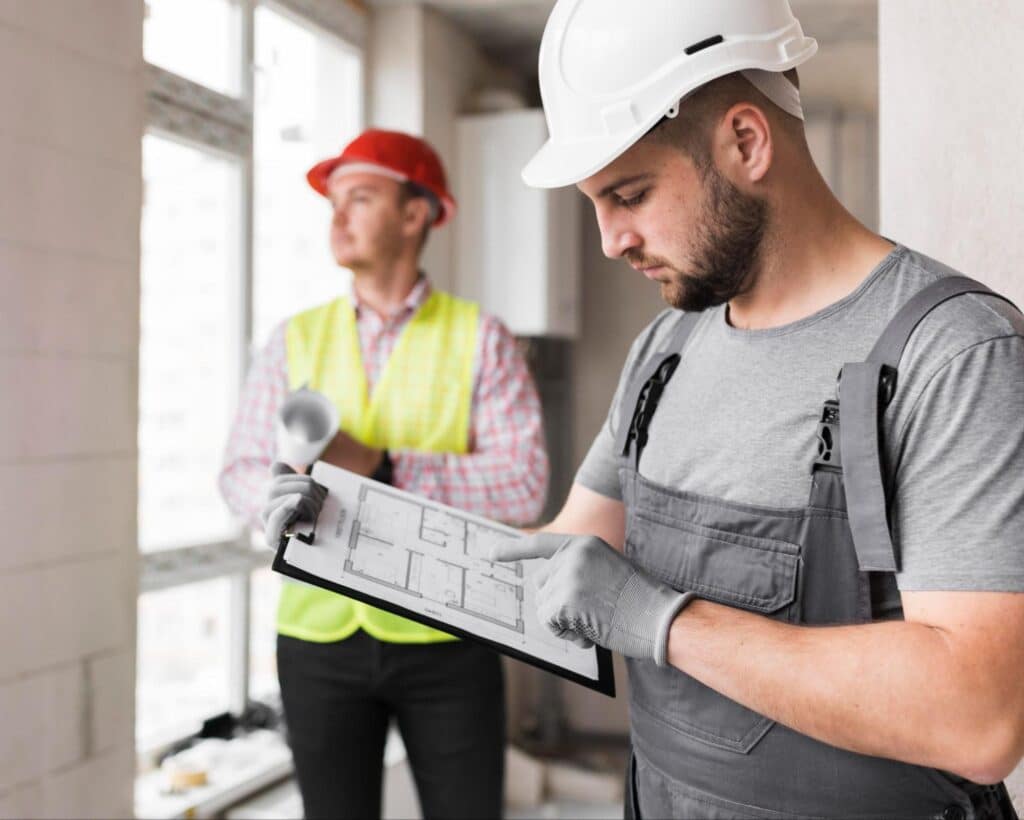
Key takeaways
- Building an investment property means paying in stages for work you rarely see. Investors often rely on progress claims and the builder’s word that each stage is done.
- Official surveyor and certifier inspections check minimum building regulations, not your contract. Neither Victoria nor Queensland requires one at pre-plaster, the stage that hides the most work.
- Every stage covers the one before it. A defect missed at frame or pre-plaster can mean cutting into finished walls or lifting tiles once the house is complete.
- Late rework costs more than the repair. It pushes back completion and the first rent, while holding costs keep running. The average new house already takes about seven and a half months to build in Victoria and Queensland.
- Independent stage inspection reports give you a dated, photographed record of the work. You can check it before each progress payment and use it as evidence if your builder disputes a defect.
People building an investment property may never stand on their own slab. They follow the build through progress claims, the occasional site photo and the builder’s word that each stage is done.
For real estate investors, the tax rules now favour that path. Under changes legislated in June 2026, investors who buy an established home after 12 May 2026 can no longer offset rental losses against their salary from 1 July 2027. Eligible new builds keep that benefit.
Here’s the catch. Every build stage covers the one before it. Once the plaster goes up, the frame behind it is out of sight for good, along with any defect in it.
Checking each stage before it’s covered is how you protect the capital you’ve put in for the long term.
Why building an investment property changes your risk
When you buy an investment property, the house already exists. When you build an investment property, you pay for one that doesn’t exist yet, in stages.
Each payment is tied to a stage: base, frame, lock-up, fixing and completion. In Victoria, the law defines each stage and caps what the builder can claim for it. In Queensland, the QBCC says payments should match the work actually done. Unless someone checks, you’re releasing money on the builder’s say-so.
Time costs money too. A new build investment property earns no rental income until it’s finished. Under ATO rules, holding costs such as interest on the land loan, council rates and land tax generally can’t be claimed until the property can lawfully be occupied and is genuinely available for rent. Your tax adviser can confirm how this applies to you.
Builds also take time. ABS data shows the average new house took about seven and a half months from start to finish in 2025–26, in both Victoria and Queensland. Any defect that needs rework pushes that date out further, on top of what building already costs in Melbourne and Brisbane.
Who’s checking the builder’s work?
Every new build gets some official inspections. Under Victoria’s building regulations, the building surveyor inspects at set points, including before the footings go in, at frame stage and at completion. Under Queensland’s, the certifier does the same for a detached house: before the slab or footings are poured, at frame and at final.
Those inspections confirm the work meets minimum building regulations. They don’t check that it meets the standard agreed in your contract. Neither state makes lock-up or pre-plaster a mandatory inspection stage by default, although the surveyor or certifier can add extra inspections.
Your builder runs their own quality checks day to day, but that’s the builder checking their own work. An independent construction inspection on an investment property is booked by you and reports to you.
Stage inspections, stage by stage: what gets covered up
Stage inspections for a new build follow the points where one trade covers another’s work. Landmark’s construction stage inspections follow five stages.
Base
Once the concrete is poured, the steel, membrane and pipes beneath it can’t be seen again. A slab problem is also one of the hardest to fix later, because everything else is built on top of it.
Frame
The frame carries the whole building. Bracing, tie-downs and straightness all need checking before the linings go on.
Pre-plaster
This stage has no mandatory inspection in either state, yet it hides the most. Insulation, wall wrap, window flashings and the wiring and plumbing inside the walls all disappear behind plasterboard. Once the plasterboard is on, checking any of it means cutting into finished walls.
Fixing
Wet areas are the focus here. The waterproofing membrane sits under the tiles, so once tiling starts you can’t check it. Cabinetry, doors and internal fixtures go in at this stage too.
Completion and handover
At practical completion, the builder says the work is finished and claims the final payment. An inspection here documents any defects or incomplete work before you pay. A report at this stage gives you a record to hold the builder to.

The cost of finding defects late
A defect caught at frame stage is usually fixed on an open wall. Found after handover, the same defect can mean cutting into plaster, lifting tiles or opening up finished work.
For an investor, the repair bill isn’t the only hit to your bottom line. Rework adds time on site, which pushes back completion and the first rent, and holding costs keep running in the meantime.
Defects that surface after handover also come with deadlines. In Queensland, the QBCC sets time limits. To keep home warranty options open, report a structural defect within three months of noticing it, and a non-structural defect within seven months of completion. The outer limit for a non-structural complaint is 12 months from completion. Leave it late and your options can narrow.
Once a tenant moves in, any defect becomes a landlord problem too. A Queensland rental property must be weatherproof and structurally sound from the day the tenant moves in. A leak, a failed membrane or another major defect can mean repairs around a tenant, or a vacancy while the work is done.
What staged inspection reports give an investor
Each report is a dated, photographed record of the work, so your investment decisions rest on evidence. Over a full build, those reports give you three things.
Evidence if there’s a dispute. If your builder disputes a defect, an independent report made at the time carries more weight than memory or a phone photo. Regulators advise owners to keep written records and photos for exactly this reason.
Confidence before each payment. A report at each stage tells you whether the work matches your contract before you release the next progress payment.
A cleaner path to your first tenant. Defects fixed during the build don’t come back as repair requests in your first months as a landlord.
Landmark’s reports include high-resolution photos and are stored in the cloud, so you can share them straight with your builder.

Protect your return before the plaster goes on
Building an investment property means paying for work you rarely see. Each stage is a one-off chance to check before it’s covered.
Landmark inspects against a 250-item checklist and delivers reports within 24 hours and liaises directly with your builder to get defects fixed, and you get 12 months of ongoing support after every inspection.
Request an Instant Quote for construction stage inspections, or see how we support investor-builders with investment property inspections at handover.